Digital Freedom as a Key Driving Force of Innovation and Economic Prosperity
In 2012, internet freedom was declared as a human right by the United Nations (Carr, 2013: pg. 621). However, access to the internet is oftentimes restricted by governments and consequently this right is frequently taken away from citizens (Freedom of the Net Report, 2024: pg. 3). Internet restrictions are often increased during uncertain periods like elections where governments “re-gauge the access to the internet and impose temporal restrictions” to consolidate their powers (Eichhorn, Linhart, 2021: pg. 1). This paper explores how internet freedom restrictions vary during election periods and its implications.
This paper mainly utilises two datasets - “Freedom in the World” and “Freedom on the Net”. The data used includes variables like global freedom status, internet and electoral freedom scores from all countries between the years of 2019 and 2024. The six-year range is adequate for observing temporal trends during this period. Both of these datasets are widely recognised datasets published by the Freedom House (Freedom House, 2024). Freedom House is an independent non-governmental organisation dedicated to the "expansion of freedom and democracy worldwide" (Freedom House, 2024). As stated in their website, the overarching goal of Freedom House is to support democracy, human rights and freedom of expression in an increasingly interconnected world (Freedom House, 2024).
Data is updated annually for both the datasets to ensure that they reflect the current global and regional trends. The Freedom of the World dataset consists of 156 countries and territories and the scores are based on two main categories, political rights (right to participate in political processes of a country) and civil liberties (freedom of expression) (Freedom House, 2024). The Freedom on the Net dataset includes digital freedom state (free, partly free and not free) and internet freedom scores for 70 countries, which covers 88% of the global internet user population (Freedom House, 2024). Internet freedom scores are based on three main indicators which are obstacles to access digital platforms, limits on online content and violations of user rights. As the freedom of the net dataset contains a fewer number of countries than freedom of the world dataset. So, countries absent from the Freedom on the Net dataset were excluded to ensure comparability.
This analysis also uses external data like population and countries where elections were held in 2023 and 2024. The population data was collected from the world bank and a list of countries where elections were held in 2023 and 2024 was manually created using global election calendars found on The International Institute for Democracy. The International Institute for Democracy and Electoral Assistance (International IDEA) is an “intergovernmental organization that supports democracy worldwide” (International IDEA, 2024). The list was cross-checked with data obtained from the National Democratic Institute (NDI). The NDI is a non-profit, non-governmental organisation that works to “strengthen and safeguard democratic institutions, processes, norms and values” (National Democratic Institute, 2024).
Freedom in the Past Six Years
A common belief is that due to the global reach of the internet, it is accessible to all (Gong et al., 2006: pg. 58). The internet is said to have a transformative power and is capable of giving voice to oppressed and marginalised communities (Mitra, 2004: pg. 492). Digital platforms are structured in such a way that it enables users to acquire agency and express their opinions (Mitra, 2004: pg. 493). These platforms facilitate the expression of free speech and provide a democratic platform for users to engage (Thornton, 2001: pg. 126). The internet allows individuals to connect, build online communities, exchange ideas, and share resources effectively (Thornton, 2001: pg. 143).
In the past, the internet has brought about significant political changes in the world. For example, during the Arab Spring movement, social media was utilised by the general public to organise protests and show solidarity against the authoritarian government (Meraz et al., 2013: pg. 139). Earlier this year, digital platforms were the main source of communication during the student-led protests in Bangladesh which led to the resignation of the Prime Minister (Turzo, 2024: pg. 3). Based on these examples, it appears that the internet serves as a useful tool for allowing people to voice their opinions and bring about political and social change. However, data suggests otherwise and presents a counterintuitive perspective that internet freedom is lower than real-life global freedom.
From Figure 1(a) and 1(b), it can be observed that there is a significant proportion of the world which is not fully free in terms of political or internet freedom.
Figure 2(a) demonstrates the ratio of countries that are politically free, partly free, and not free over the past six years. On the other hand, Figure 2(b) highlights the ratio of countries that are digitally free, partly free, and not free during the same period. Global freedom state is defined by measuring democratic participation, freedom of expression and rule of law in a country (Freedom House, 2024). On the other hand, the state of internet freedom depends on the degree of freedom individuals have to access digital platforms and communicate online without restrictions, censorship or violations of user rights (Freedom House, 2024).
The visualisation below is created using the ratio of countries that fall under each of the three categories (free, partly free and not free) as provided in the original dataset. Both the visualisations include only the countries that are present in both the datasets.
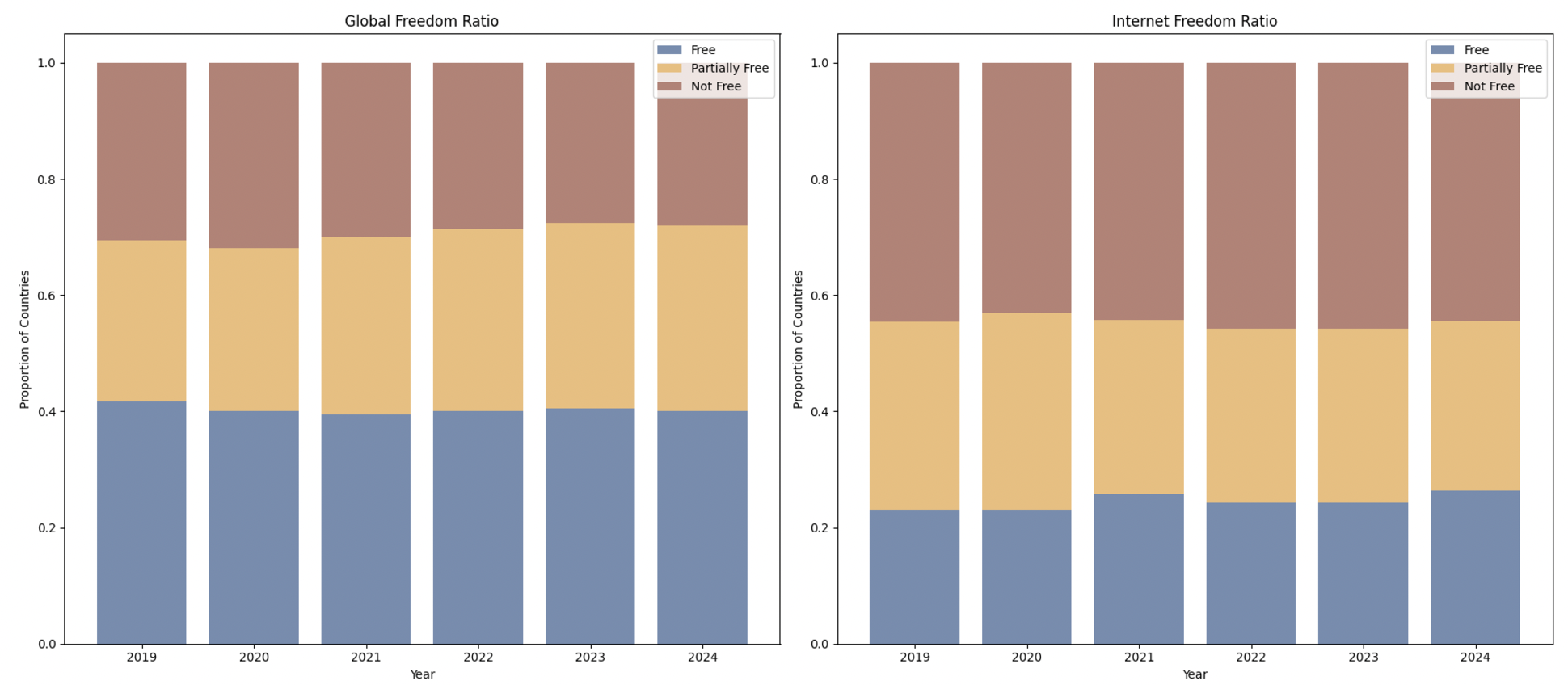
As observed, compared to global political freedom, a larger share of countries fall in the "Not Free" category in terms of internet freedom. This indicates that digital spaces are more heavily restricted whereas political freedom in the real world is more balanced. Here, it can be concluded that governments of countries with relatively "Free" political systems still impose limitations on digital spaces. An explanation for this trend is that democracies use surveillance and impose restrictions on internet usage for “seemingly innocuous purposes” like combating terrorism and serious crimes (Königs, 2022: pg. 2).
Moreover, over the six years, the "Not Free" category for internet freedom appears to have increased slightly, while "Partially Free" and "Free" categories have either stagnated or declined slightly. This suggests a global trend toward stricter controls on internet usage and digital freedoms. Research done on this topic further supports this claim. Literature suggests that in recent years “established liberal democracies have expanded their surveillance capacities” (Königs, 2022: pg. 2). Surveillance and internet restrictions are further increased during periods of political uncertainty, like during elections. For example, during the 2024 elections, a number of “incumbents restricted access to content about the opposition” which reduced the ability of opposition parties to persuade and mobilise voters (Freedom of the Net Report, 2024: pg. 7). Thus, it can be argued that the internet is no longer serving as a platform for democratic engagement but instead it erodes "individual agency, privacy, and freedom" (Carr, 2013, p. 622).
Digital sphere often serves as a double-edged sword which enables creation of communities but can also have detrimental effects on the society such as causing radicalisation or spreading fake news (Frau-Meigs, 2019: pg. 75). As suggested in Figure 2, citizens of politically free countries often face internet restrictions. This could be attributed to two main factors: firstly, governments may impose internet censorship to limit opposition or to control the flow of information and safeguard their political interests (Eichhorn, Linhart, 2021: pg. 2). On the other hand, restrictions may also be imposed as a protective measure to shield citizens from the harmful aspects of the digital world, such as cybercrime, disinformation, and online extremism (Frau-Meigs, 2019: pg. 80).
Internet Freedom and Electoral Freedom During Election Periods
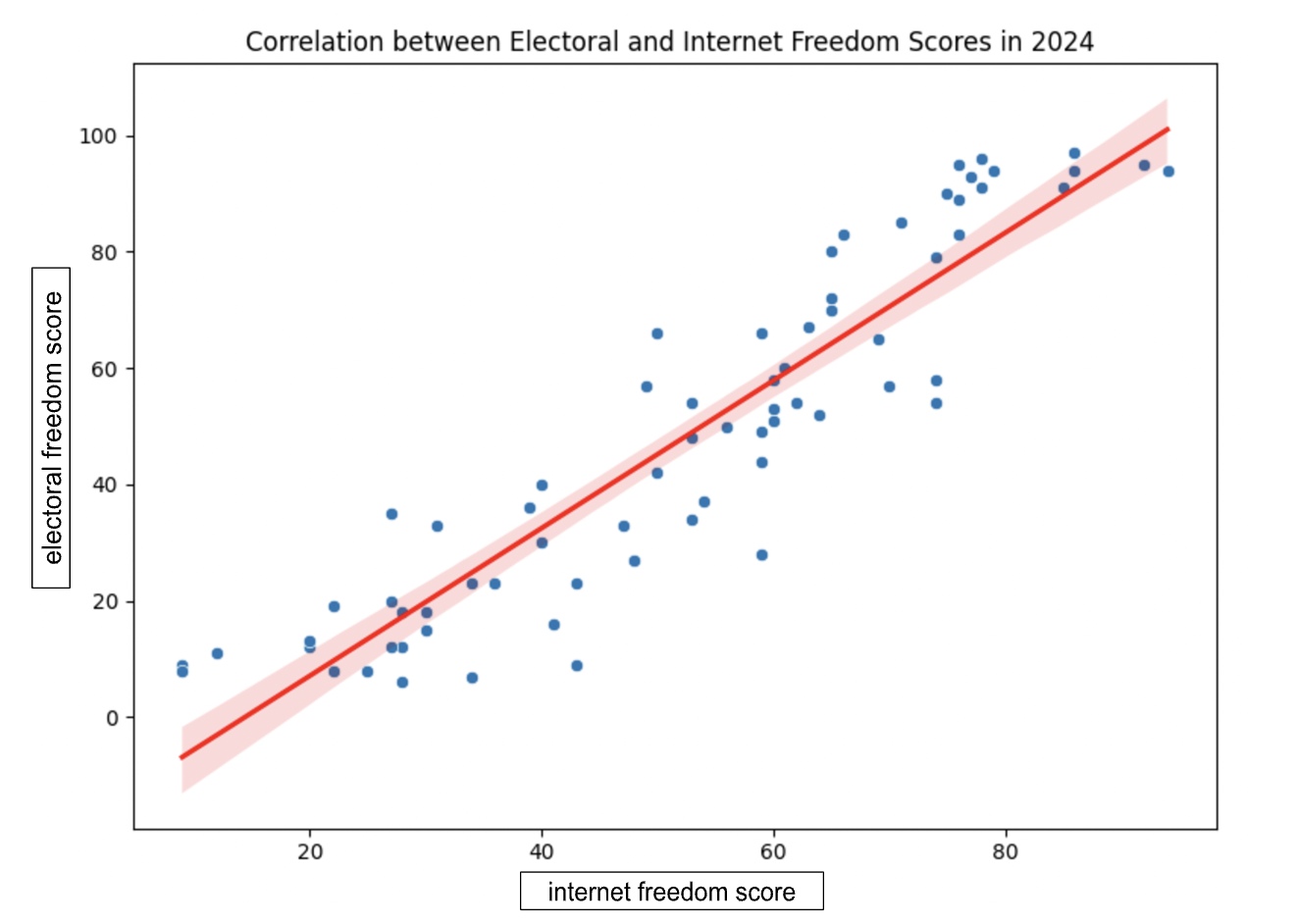
The annual Freedom House report suggests that global internet freedom has declined for the fourteenth consecutive year in 2024 with "protections for online freedom diminishing in 27 countries" (Freedom of the Net Report, 2024: pg. 1). Oftentimes, this is done by governments for their own benefit and not for the welfare of the citizens (Eichhorn, Linhart, 2021: pg. 2). Using the data from the Freedom House datasets it was found that internet freedom and electoral freedom are highly correlated.
Figure 2 on the right illustrates the trend of this correlation, as demonstrated by the regression analysis.
It is important to visualise that the values change every year and the correlation is subjected to uncertainty. So, a 95% confidence band is present around the main trend line to “enhance the sense of uncertainty in the reader” and urge them to confront the possibility of different outcomes (Visualising Information: Uses and Abuses of Data, Module 8, 2024).
This correlation implies that internet freedom acts as both a reflection of and a tool for democracy.
Correlation During the 2023 Elections
An in-depth analysis of the 2023 election period highlights the trends in the relationship between internet and electoral freedoms before, during and after the elections. For this analysis, a list of countries where elections were held in 2023 was manually created by using election calendars from IDEA and NDI (International IDEA, 2024; National Democratic Institute, 2024). Internet and electoral freedom scores for these countries from 2022, 2023 and 2024 were extracted from the Freedom House datasets and merged. Only countries with non-zero electoral freedom scores are considered for this analysis, as countries with zero scores are complete autocracies, which are not the focus of this paper. Moreover, data about the population of each country as found in the world bank was also augmented to the dataset (World Bank, 2023).
Using this dataset, bubble scatterplots were created as scatterplots are useful for visualising the potential relationship between two variables (Downey, 2014). For further clarity, the visualisations utilise visual variables like colour and size (Visualising Information: Uses and Abuses of Data, Module 2, 2024). An intuitive colourblind friendly colour scheme is employed to align with the epistemological beliefs of the users. Free countries are coloured blue to represent “freedom and unity” and oppressed countries are marked in red (Nikonova et al., 2021: pg. 620).
Explore the scatter plots below (in full view) to observe changes in country positions.
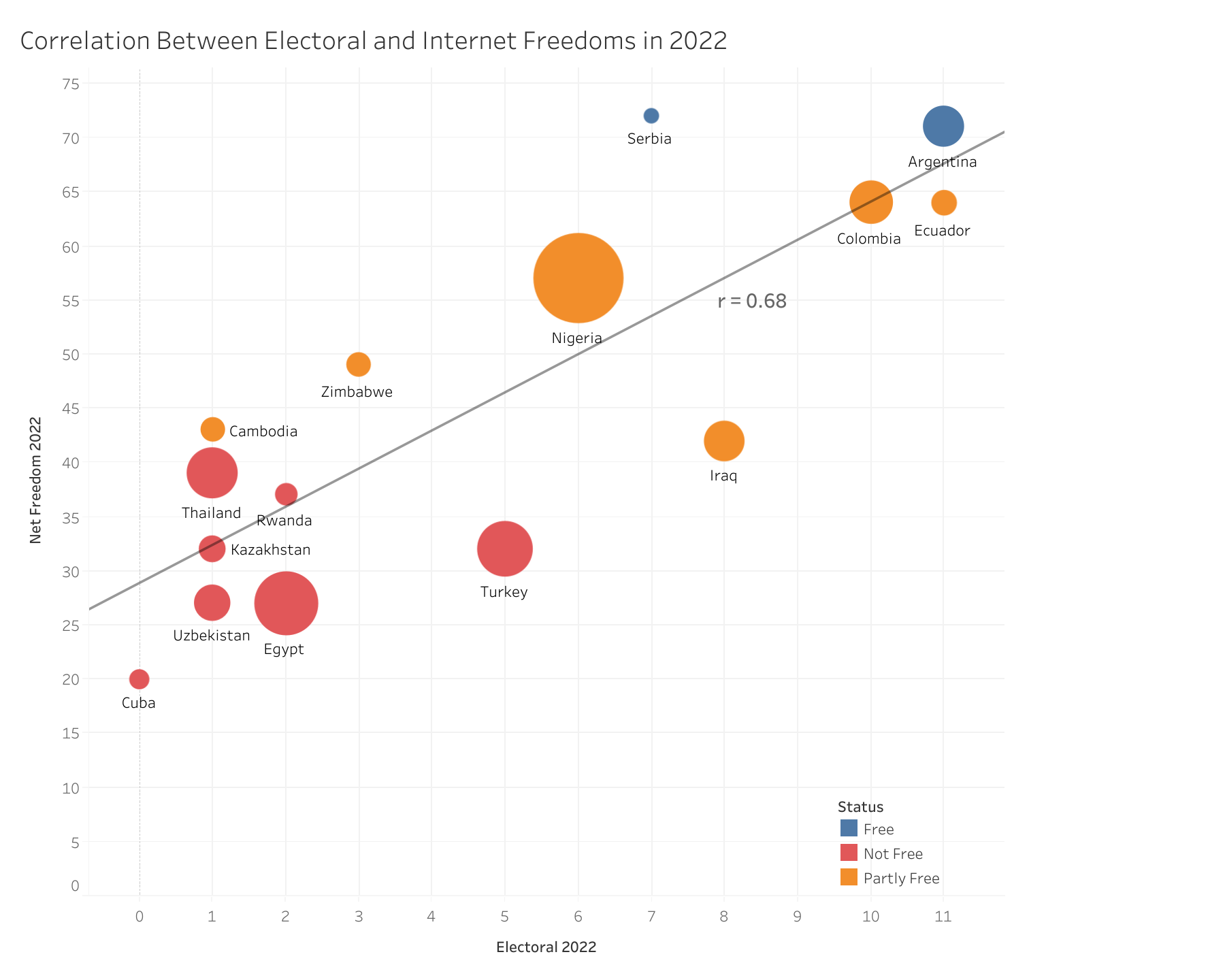
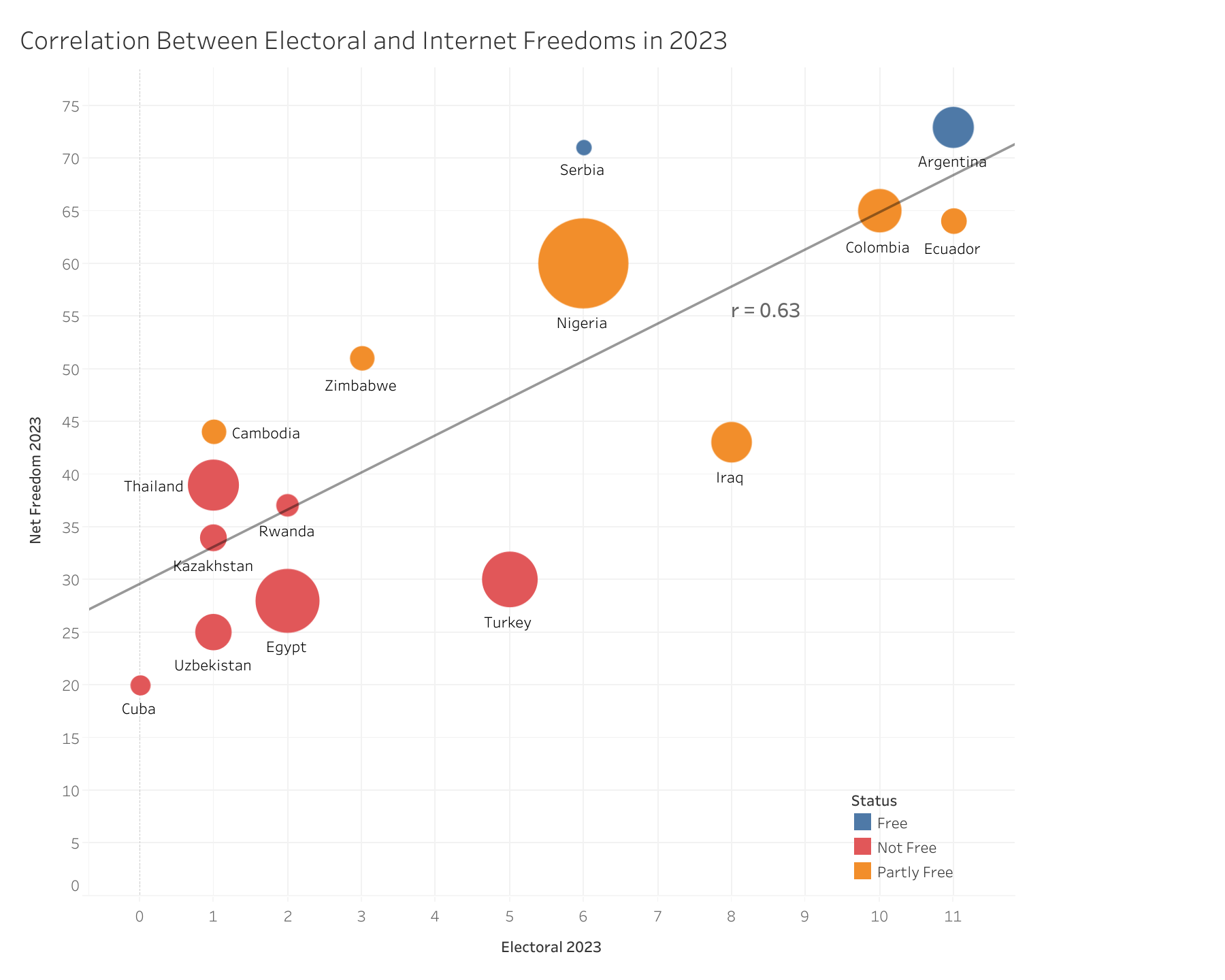
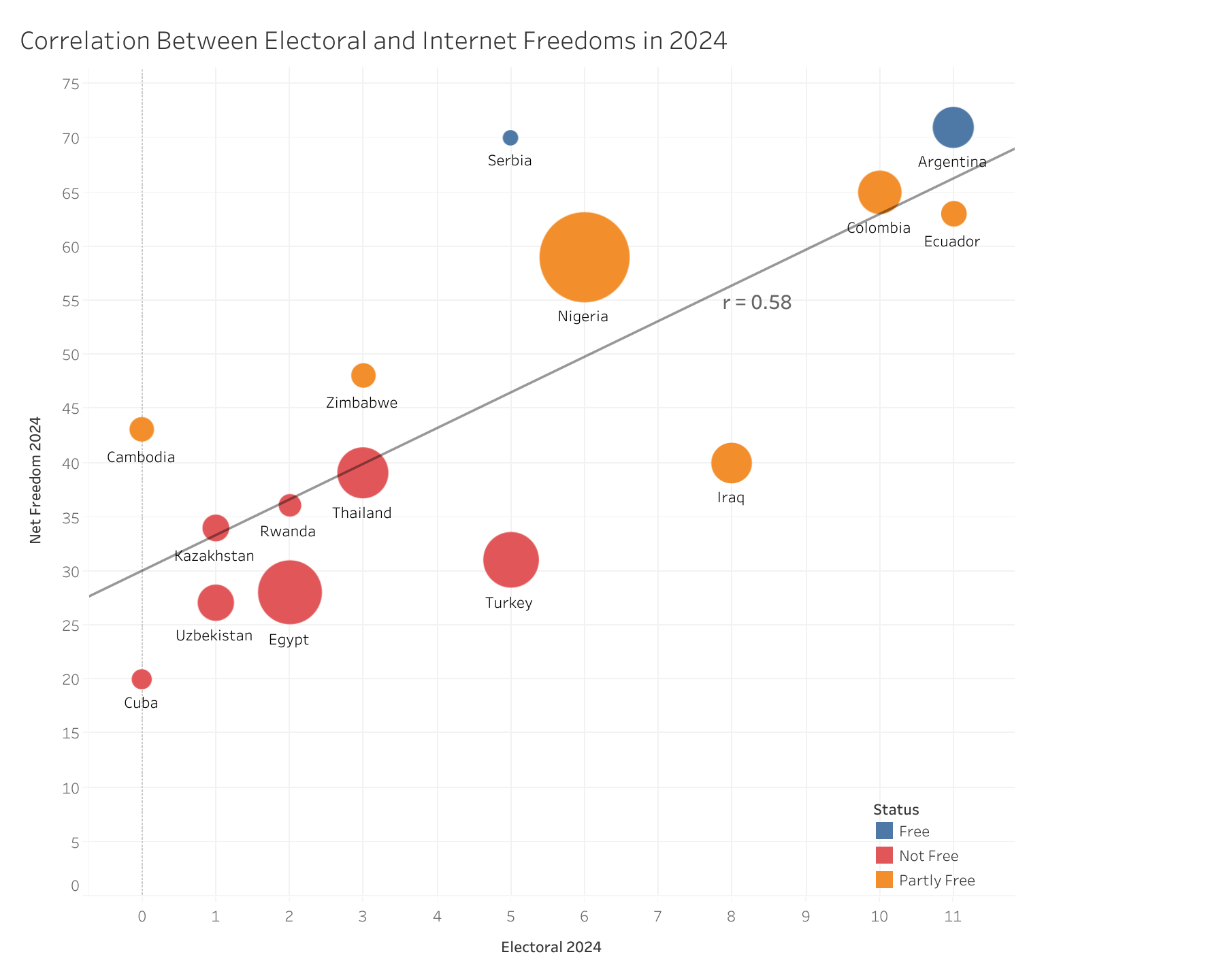
All three plots in Figure 3 reveal a positive correlation between internet and electoral freedoms across all three years. Countries with higher internet freedom scores tend to be "Free" also have higher electoral freedom scores whereas countries with low electoral scores tend to have low internet freedom scores and are not "Free".
Over the period of elections, the correlation between the two variables gradually decreased from a correlation value (r-value) of 0.68 to 0.58. This pattern can be analysed using the theoretical perspective of government surveillance (Königs, 2022: pg. 2). As seen in the graph, the year before the elections (here 2022) typically shows the highest correlation between net freedom and electoral freedom scores. This is because political parties and civil society organisations increase their use of digital tools to employ internet-based campaign strategies to mobilise support (Sarıtaş, Aydın, 2015: pg. 2). Moreover, the high correlation could also be because of high political engagement by the general public. Political engagement is traditionally defined as activities such as voting, contributing to campaigns, volunteering, and reaching out to government officials (Dahl, 1989). Online political engagement requires “fewer resources and less effort than traditional activities” and is positively associated with “voting and communication behaviours” (Silva et al., 2018: pg. 745).
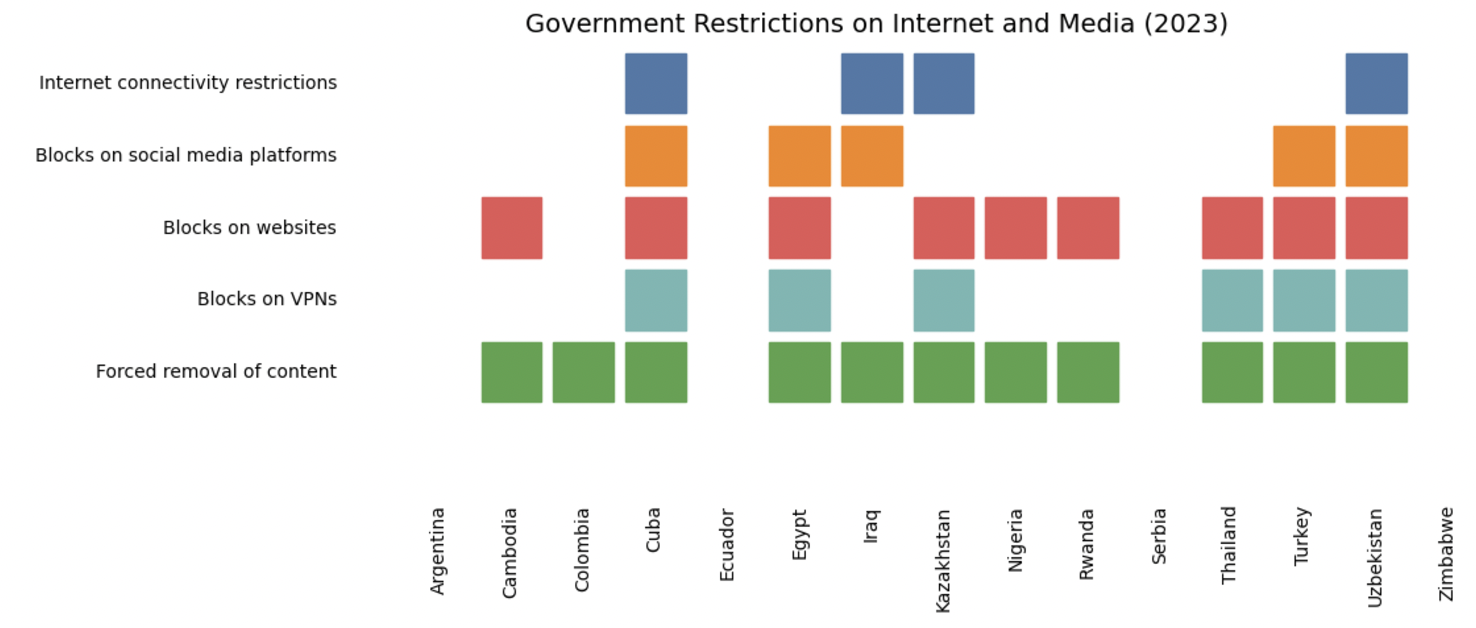
The correlation value declines during the actual election year compared to the previous year. This may result from incumbents tightening internet control and surveillance to secure election wins (Eichhorn, Linhart, 2021: pg. 2). This is further demonstrated by figure 4 below which shows that governments in 11 out of 15 countries where elections were held in 2023 imposed some sort of internet restriction. The correlation between internet and electoral freedom further decreases the year after the elections. This is done by governments to consolidate power and “avoid mass unrest that threatens the legitimacy” of the government (Sutterlin, 2020: pg. 15).
An interesting feature to observe is that countries that are free, like Argentina and Serbia, tend to have similar electoral and internet freedom scores throughout the years. On the other hand, the position of countries that are not free or partly free tend to change on the scatterplots with the progression of years. The biggest change in the freedom scores is observed in Egypt. Egypt has been governed in an increasingly autocratic way by President Sisi, who first took power in a 2013 coup (Egypt Freedom Report, 2023) Although the electoral score of the country remained constant, there was a gradual increase in internet freedom score after the election. This confirms previous literature and suggests that internet freedom was restricted during the elections by the government to suppress opposition.
Methods of Internet Restriction During Elections in 2023
The 2023 elections were associated with various types of online disputes, censorship and online oppression. Figure 4 visualises the methods taken by countries during elections to censor and control the digital sphere. Each coloured cell represents at least one occurrence of the "cited control between June 2022 to May 2023" (Freedom of the House, 2024). It can be observed that restrictions were imposed by both autocratic and democratic countries during election years.
Governments in countries with low freedom, like Cuba, Uzbekistan and Egypt, exercised more control over the internet. In contrast, governments of countries with higher freedom, like Argentina and Serbia, imposed almost no internet restrictions. This is because governments of countries with low freedom tend to “feel more threatened” by the potential of the internet to enable greater mobilisation and therefore take preventive measures (Sutterlin, 2020: pg. 21). Figure 4 suggests that several countries faced internet restrictions during elections in 2023. Internet restrictions and shutdowns during critical periods often lack rationale but are frequently justified as measures for the “re-establishment of national security” or “responses to foreign interference” (Eichhorn, Linhart, 2021: pg. 2). This suggests lower transparency in those countries and lack of trust in governments (Königs, 2022: pg. 2).
Predicting Aftermath of 2024 Elections Across the Globe
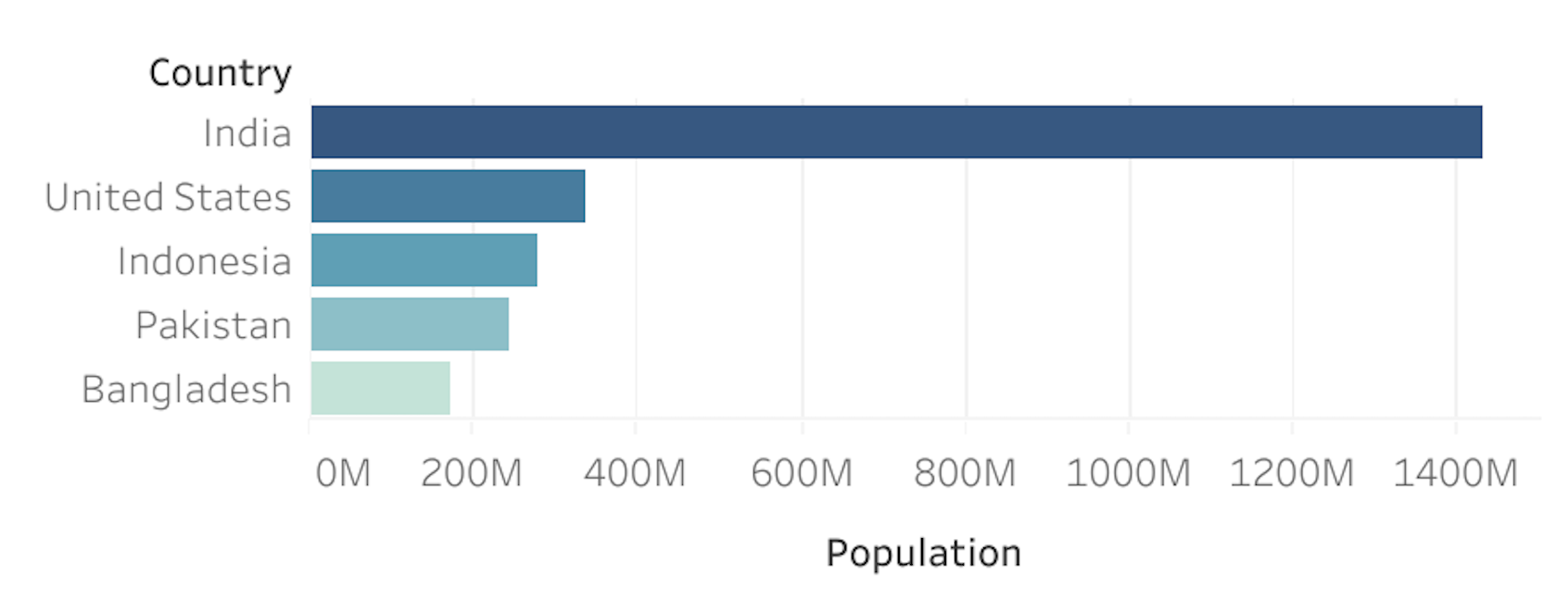
A similar trend of decreasing correlation is observed for the 2024 elections. With around 63 elections happening in 2024, the year is referred to as the election year (Ewe, 2023). Most of the most populous democratic countries in the world held their national elections in 2024 (International IDEA, 2024). This includes India, the United States, Indonesia, Pakistan, and Bangladesh, which together account for around 2.5 billion people, as shown in Figure 6. In total, approximately 3 billion people voted for their representative this year (International IDEA, 2024).
2024 has seen significant political movements and intense conflicts in regions like Ukraine, Russia, Israel, Palestine, and Bangladesh (Colomina, 2024). These are some of the most intense and active conflicts the world has seen since the end of the Second World War (Colomina, 2024). This makes it increasingly important to observe how different regions of the world uphold democracy and ensure free and fair elections.
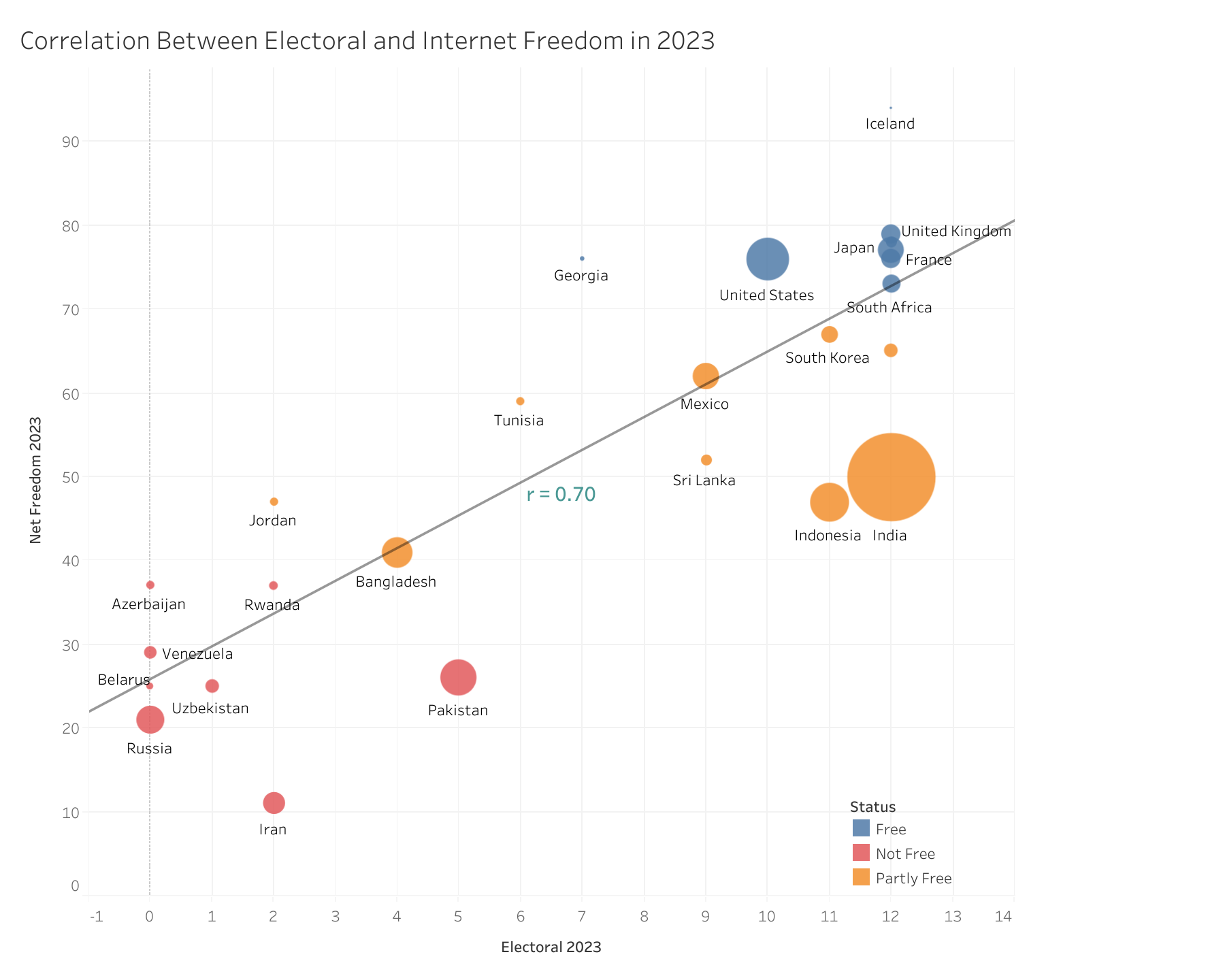
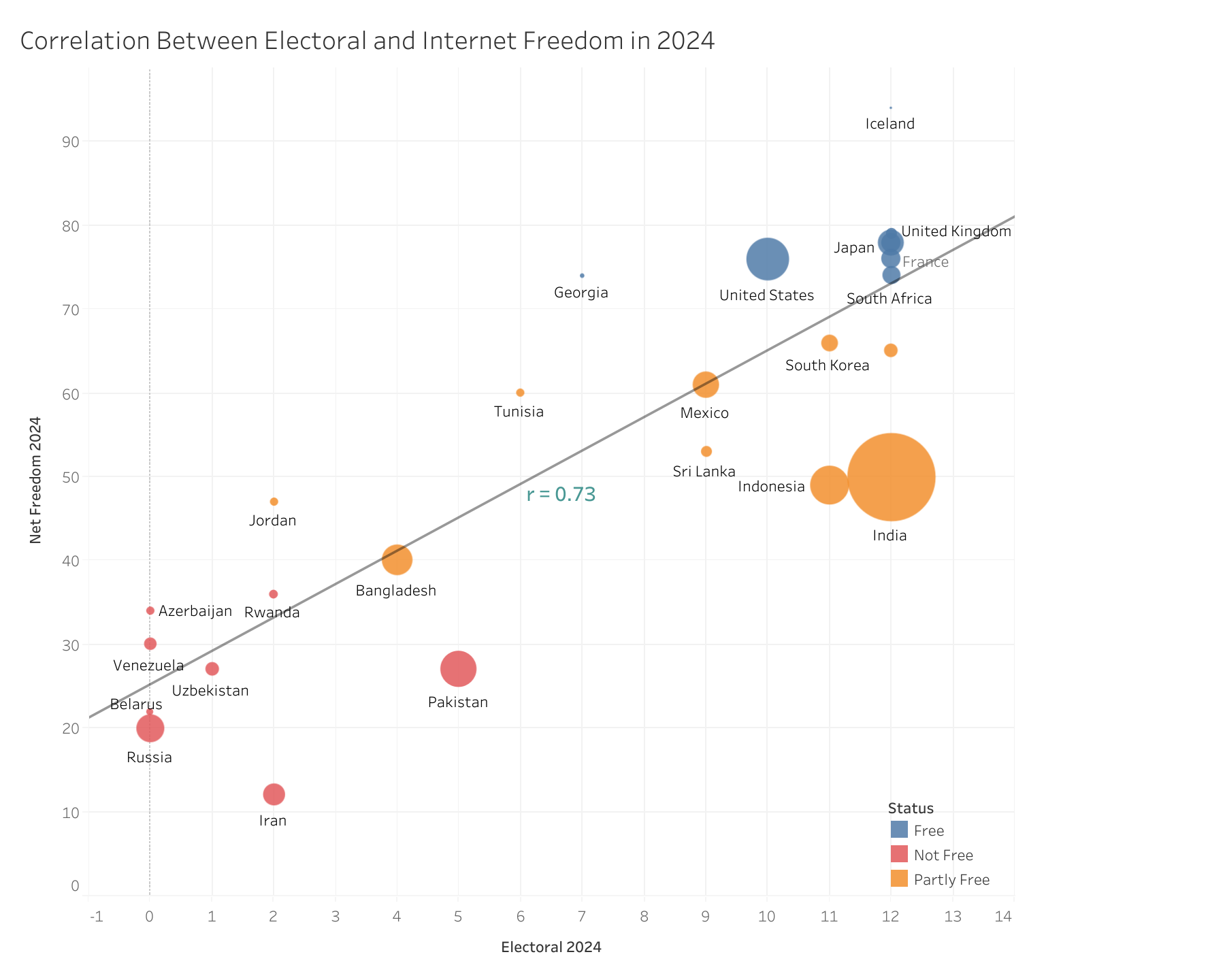
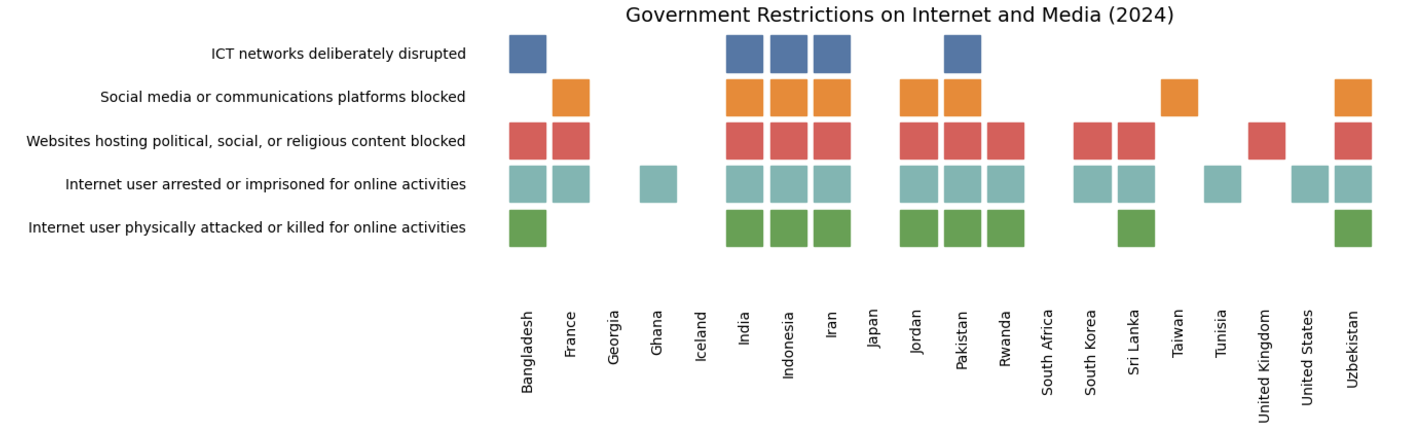
A similar pattern to the 2023 elections is observed in the 2024 election data, as shown in Figure 6. The correlation between internet and electoral freedom decreased during and after the elections. The positions of free countries remained constant whereas the position of some partly free and not free countries changed. Counterintuitively, the internet freedom score of Pakistan and Indonesia increased during the election year. Despite this, the governments of the two countries used all five possible means to control the internet during the elections as shown in Figure 6.
As suggested in Figure 8, citizens of free countries like Iceland, Georgia, South Africa and the United Kingdom experienced almost no internet restriction during the election period. On the other hand, governments of India, Indonesia, Iran and Pakistan exercised high internet restrictions during the year to suppress opposition and increase chances of winning the elections (Sutterlin, 2020: pg. 21). This confirms the trend observed from the 2023 elections and proves that countries with higher states of freedom exercise less restrictions on the internet. Since the 2024 elections largely follow trends observed in 2023, a similar pattern is anticipated for 2025. So, a lower correlation between electoral and internet freedom scores in 2025 is expected in countries that held elections in 2024. This suggests that governments will likely maintain internet restrictions to minimise chances of political unrest just after the elections (Sutterlin, 2020: pg. 15; Freedom House, 2023).
Conclusion
As observed in the freedom house datasets, political and internet freedoms are deeply intertwined. Internet freedom is a human right and it is of great importance that we protect freedoms in the face of the rising digital authoritarianism (Carr, 2013: pg. 621).
The internet has historically been a vital tool for political engagement and giving agency to citizens (Mitra, 2004: pg. 493). However, its role is being increasingly constrained by the governments, particularly in countries with lower levels of freedom. This makes it difficult for the citizens of the countries to live in a free country and consequently leads to dissatisfaction and distrust in the governments (Königs, 2022: pg. 2). As observed in the 2023 and 2024 elections, governments in regions with lower electoral freedom imposed higher internet restrictions to suppress opposition and ensure electoral victories. The different levels of internet freedom during the election period suggests that the internet is misused by governments for their own benefit. In recent years governments have censored information, increased surveillance and restricted internet use (as seen in Figure 3 and Figure 7) to consolidate power and limit online political discourse.
However, the digital sphere has also served as a powerful tool for the general public, enabling individuals to connect with others across the globe and share resources efficiently (Mitra, 2004: pg. 494). In the past, it has played a critical role in challenging authoritarian regimes, as seen in the 2011 Arab Spring protests and the 2024 Bangladesh protests that resulted in the resignation of the prime minister (Meraz et al., 2013: pg. 139; Turzo, 2024: pg. 3). Despite the increasing constraints on internet freedom, citizens have found innovative ways to strategically use digital tools to tactically evade online repression (Lutscher & Ketchley, 2023). If governments prioritise improving internet freedom while ensuring online safety and security, they can facilitate the development of a more open and democratic environment. This approach would strengthen trust in governments and support progress toward a more democratic society (Thornton, 2001: pg. 143).
References
Carr, M. (2013). Internet freedom, human rights, and power. Australian Journal of International Affairs, 67(5), 621-637.
Colomina, C. (2024). The world in 2024: Ten issues that will shape the international agenda. Cidob. Retrieved from https://www.cidob.org/en/publications/world-2024-ten-issues-will-shape-international-agenda
Dahl, R. A. (2008). Democracy and its critics. Yale University Press.
Downey, A. (2014). Think stats: Exploratory data analysis. O'Reilly Media, Inc.
Eichhorn, K., & Linhart, E. (2021). Election-related internet shutdowns in autocracies. Conference Paper IPSA. Retrieved from https://www.ipsa.org/
Freedom House. (2024). Freedom House. Retrieved from https://freedomhouse.org/
Freedom House. (2023). Egypt: Freedom in the World 2023 Country Report. Retrieved from https://freedomhouse.org/country/egypt/freedom-world/2023
Freedom House. (2024). The struggle for trust online. In Freedom House. Retrieved from https://freedomhouse.org/report/freedom-net/2024/struggle-trust-online
Frau-Meigs, D. (2019). Disinformation, radicalisation, and other information disorders: Lessons learned for media and information literacy. Media, 75.
Gong, W., Li, Z. G., & Stump, R. L. (2007). Global internet use and access: Cultural considerations. Asia Pacific Journal of Marketing and Logistics, 19(1), 57-74.
International IDEA. (2015). Idea.int; IDEA. Retrieved from https://www.idea.int
Lutscher, P. M., & Ketchley, N. (2023). Online repression and tactical evasion: Evidence from the 2020 Day of Anger protests in Egypt. Democratization, 30(2), 325-345.
Mitra, A. (2004). Voices of the marginalized on the internet: Examples from a website for women of South Asia. Journal of Communication, 54(3), 492-510.
Meraz, S., & Papacharissi, Z. (2013). Networked gatekeeping and networked framing on #Egypt. The International Journal of Press/Politics, 18(2), 138-166.
Nikonova, Z. V., Yastremskaya, I. G., Akhmadullina, E. N., & Kharitonova, D. I. (2021). Symbolism of colour names with the meaning "freedom" in German political discourse. European Proceedings of Social and Behavioural Sciences.
Sarıtaş, A., & Aydın, E. E. (2015). Elections and social media: An overview. International Journal of Social Ecology and Sustainable Development, 6(1), 59-72.
Silva, D. E., Hutchens, M. J., Donaway, R. R., & Beam, M. A. (2018). 300 million clicks and political engagement via Facebook in the 2016 American presidential election: How online activity changes across time and sources. Mass Communication and Society, 21(6), 742-762.
Sutterlin, E. (2020). Flipping the kill-switch: Why governments shut down the internet.
Thornton, A. L. (2001). Does the internet create democracy? Ecquid Novi, 22(2), 126-147.
Turzo, M. A. P. (2024). The impact of digital platforms on Bangladesh's 2024 student-led revolution: Analysing the role of social media as a catalyst.
University of Manchester. (2024). Visualising information: Uses and abuses of data (Module 8: Visualising uncertainty). Unpublished.
University of Manchester. (2024). Visualising information: Uses and abuses of data (Module 2: Visual variables). Unpublished.
World Bank. (2023). Population estimates and projections | DataBank. Databank.worldbank.org. Retrieved from https://databank.worldbank.org/source/population-estimates-and-projections